
Gas line repair · new gas lines · appliance hook-ups
Gas line repair in Louisville
Parker Plumbing finds and repairs gas line leaks. We also run new gas lines for ranges, dryers, water heaters, fireplaces and grills, inside the house or buried in the yard.
Smell gas? Leave the area first.
Go where you cannot smell gas. Until then, do not switch anything on or off, light a match or use a phone. Do not touch valves or try to turn off the meter. Then call 911 and LG&E at (502) 589-1444. When the area is safe, call us for the repair.
Signs of a gas line problem
LG&E adds a rotten-egg smell to natural gas so you can notice a leak. LG&E also says not to rely on smell alone. Any of these is a reason to act.
- A rotten-egg or sulfur smell
- Hissing, whistling or roaring from the ground or a gas appliance
- Dirt spraying into the air over a buried line
- Dead or dying plants in an area that is otherwise damp
- Steady bubbling in a pond, creek or puddle
Who fixes which part of the gas line
In Louisville, the gas line has two owners. LG&E says it owns the lines up to and including the gas meter. You own the lines from the meter to your appliances.
Your part can include buried lines in the yard. LG&E names lines to grills, pool heaters, generators and other outdoor appliances as customer-owned.
If LG&E finds a leak on your side of the meter, it turns off your gas. LG&E does not repair customer-owned lines. LG&E says licensed plumbing, heating and mechanical contractors can inspect, find and repair them. That is where we come in.
One more LG&E rule: if the gas at the meter was shut off for a leak, do not turn it back on yourself. After the repair, LG&E checks the lines and turns the gas back on.
Gas line work we do
Gas leak repair
We put pressure on the line and spray the pipe with a leak-finding solution. Then we repair the leak and test the line again. See gas leak detection.
Buried gas line repair
Leaks in lines that run under the yard to a garage, a grill or another building. When the repair means digging, our crew digs. See excavation.
New gas lines
A line for a new range, dryer, water heater, fireplace or outdoor grill.
Moving a gas line
Moving a line when an appliance moves. One recent job: moving the gas line for a stove in a garage building.
Appliance hook-ups
Connecting gas appliances with a new connector, the right fittings and a shut-off valve.
Gas water heaters
Gas lines and hook-ups for a new or replacement gas water heater. See water heater replacement.
Pressure testing
Checking that the system holds pressure after a repair or a new line.
Restaurants and businesses
Gas lines for kitchen equipment, planned around your hours. See restaurant plumbing.
Who does the work
Parker Plumbing is a small family company that has served Louisville since 1985. Parker Plumbing is licensed in Kentucky. We do gas line work across Louisville and Jefferson County. When you call, you talk to the people who do the work.
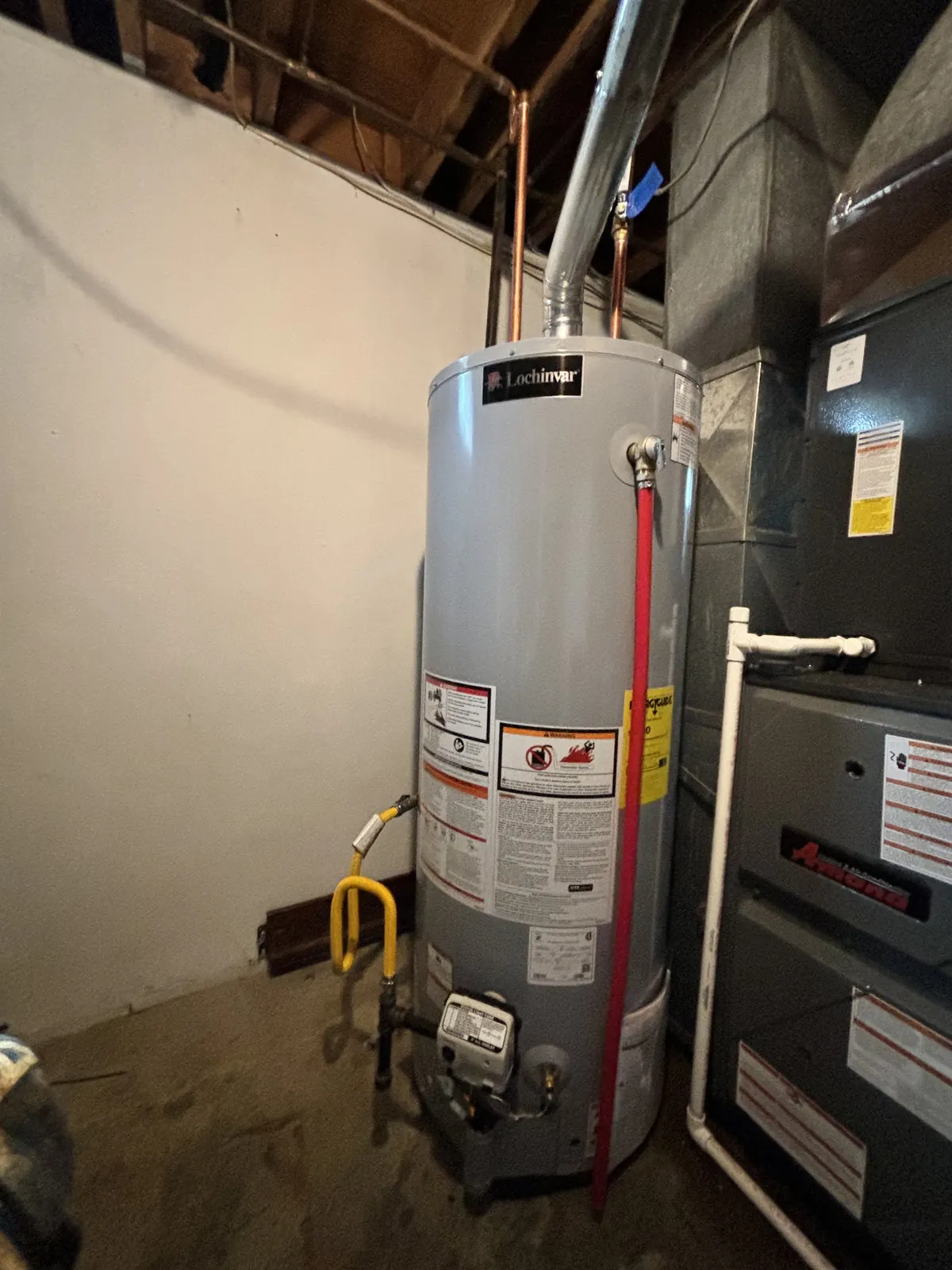
Pictured: a gas water heater our crew installed in a Louisville basement.
We own two excavators. When a buried line needs digging, the same crew digs, repairs and tests it.
About Parker PlumbingPermits and the pressure test
Permit rules depend on the work. Louisville Metro says gas permits come through the Kentucky Department of Housing, Buildings and Construction. Local ordinance and the Kentucky Building Code require them. Kentucky follows the National Fuel Gas Code (NFPA 54) for gas piping.
The pressure test matters most. LG&E's gas piping handbook says house lines must pass a pressure test before LG&E turns on gas service. A new line to a new appliance gets the same test. LG&E can refuse to turn on gas to piping it finds unsafe or leaking. When a line is added to existing piping, LG&E turns off the meter for the work.
We pull any plumbing permit the job needs, gas permits included. We tell you what your job needs before we start.
Appliance connectors and shut-off valves
A flexible connector joins the gas line to a range, dryer or water heater. A few rules keep it safe:
- Old brass connectors. The U.S. Consumer Product Safety Commission (CPSC) warns that old uncoated brass connectors can fail. It says to replace them with a new coated brass or stainless steel connector. CPSC says only a qualified professional should check the connector. Do not move the appliance to look.
- New appliance, new connector. CPSC says to replace the connector whenever the appliance is replaced or moved.
- A shut-off valve nearby. LG&E's handbook calls for an easy-to-reach shut-off valve within 6 feet of each gas appliance.
- Connectors stay in the open. Connector makers say not to run a connector through a wall, floor or cabinet, and not to bury it.
Buying a new gas range or dryer? Call us to hook it up with a new connector and check the valve.
Yellow flexible gas tubing (CSST)
Some homes have thin, flexible stainless steel gas tubing with a plastic jacket instead of black steel pipe. It is called CSST, short for corrugated stainless steel tubing.
LG&E's handbook says CSST must be bonded to the electrical ground. The bonding follows the National Fuel Gas Code and the maker's instructions. The reason is lightning. One maker says the thin tubing may be damaged by a lightning strike more easily than steel pipe.
Not sure your CSST is bonded? Have a qualified installer or an electrician check it.
Digging near a gas line
Kentucky law requires a call to 811 at least two full working days before digging, Kentucky 811 says. Utilities then mark their lines.
811 does not mark private lines. LG&E's example is a gas line from the meter to a grill. A private locating company marks those.
Before we dig, we request utility marks through Kentucky 811. Private lines, such as a gas line to a grill, need a separate locate before anyone digs.
Carbon monoxide alarms
LG&E notes that gas burned without enough air can make carbon monoxide, a poisonous gas. CPSC advises a CO alarm on every level of the home and outside sleeping areas. Test the alarms every month and change the batteries every year.
How a gas line job goes
Most jobs follow these steps.
-
You call
For a repair, tell us where you noticed the smell or sound. Tell us if LG&E has been out. For a new line, tell us the appliance and where it will go.
-
We look at the line
We find the leak, or plan the route for the new line.
-
You get a price
Priced by the job, not by the hour. No mileage charge.
-
We do the work and test it
We repair or install the line, then check that it holds pressure.
Common questions
Still not sure? Call and ask. You talk to the people who do the work.
Call (502) 239-1163What does a gas leak smell like?
Rotten eggs or sulfur. LG&E adds the smell so you can notice a leak, but some leaks are hard to smell. If you smell gas, leave first and call from outside.
Does LG&E fix leaks on my side of the meter?
No. LG&E responds to leak reports and makes the area safe, but it does not repair customer-owned lines. Repairs past the meter are the property owner's job, and that is where we come in.
Can you add a gas line for a new appliance?
Yes. Tell us the appliance and where it will go, and we'll tell you what the job involves.
Will 811 mark the gas line to my grill?
No. A line from the meter to a grill, pool heater or other building is a private line. 811 marks utility lines only.
Can I reuse the old connector on a new range or dryer?
No. CPSC says to replace the connector whenever the appliance is replaced or moved.
Do you do gas work for restaurants?
Yes. See restaurant plumbing and commercial plumbing.