
Sump pumps · sewage ejectors · effluent pumps
Sump pump repair in Louisville
Water in the basement after a hard rain? Parker Plumbing repairs, replaces and installs sump pumps in Louisville homes and businesses. We also work on sewage ejector and effluent pumps. Call (502) 239-1163, day or night.
Water rising in the basement right now?
Do not wade into a flooded basement. If water has reached outlets, cords or the electric panel, or you cannot tell, stay out. Never touch the pump, plugs or breakers while you stand in water. Then call us, day or night.
Signs your sump pump needs repair
A sump pump sits in a pit in the basement floor. When water fills the pit, a float switch turns the pump on, and the pump sends the water outside. Call if you notice any of these.
- Water is rising in the pit, but the pump does not start
- The pump hums but no water moves
- The pump runs and runs, even when the pit is empty
- The pump turns on and off every few seconds
- Water on the floor around the pit after rain
- A loud grinding or rattling noise from the pit
Why sump pumps fail
Most of our sump pump calls come after heavy rain. That is when the pump has to work hardest, and when a weak part shows up.
Louisville gets about 48 inches of rain in a normal year. That figure comes from National Weather Service climate data for 1991 to 2020. Some storms bring much more at once. In early April 2025, more than 2 inches fell at Louisville three days in a row. The National Weather Service says that was a first in the Louisville record.
When we find a pump that quit in a storm, the cause is usually one of these:
- The power went out. A standard sump pump needs electricity. Storms knock out power when the pit is filling fastest.
- The float switch is stuck. It can catch on the side of the pit or on the pump cord. Then the pump never gets the signal to start.
- The pump wore out. A motor that has run for years can slow down or stop.
- The pump cannot keep up. In a hard rain, a small pump may not move water as fast as it comes in.
- The discharge line is blocked. If the pipe that carries water outside is clogged or crushed, the water has nowhere to go.
- The check valve failed. This valve stops pumped water from falling back into the pit. When it fails, the pump runs more than it should.
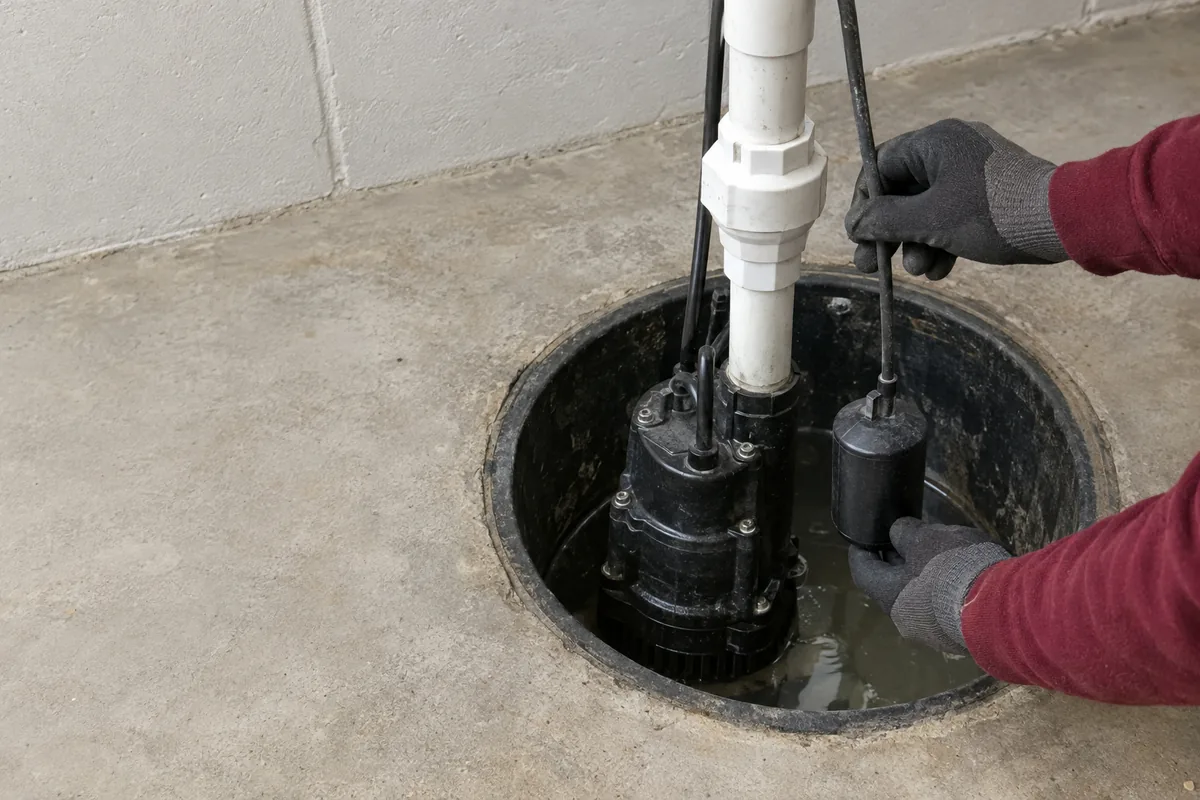
Sump pump repair, replacement and installation
Sump pump repair
Finding why the pump stopped: the float switch, the check valve, the discharge line or the pump itself. Then fixing it.
Sump pump replacement
A new pump in the old pit when the old pump has failed or cannot keep up.
Sump pump installation
A new pit and pump where the basement has none. In Kentucky, a new plumbing installation needs a state plumbing permit. We tell you what your job needs.
Discharge line work
Fixing or rerouting the pipe that carries water out of the house. The water should end up where the rules allow.
Sewage ejector pumps
Repair and replacement of the pump that lifts wastewater from a basement bathroom or laundry to the sewer line.
Effluent pumps
Repair and replacement of the pump that moves septic wastewater out of a septic or dosing tank.
24-hour service
Pump quit in the middle of the night? Call any time. See 24-hour emergency plumbing.
Where the water can go: the MSD rule
A sump pump must not drain into the sanitary sewer in Louisville. The discharge rules of Louisville MSD, the Metropolitan Sewer District, forbid it (section 2.04). The same goes for downspouts. MSD's rules send sump water onto the ground outside, where it can soak in, or into the storm sewer system.
MSD explains why: pumped rain water overloads the sewer pipes and causes backups and overflows, sometimes in a neighbor's basement. On its illicit discharge page, MSD calls these connections illegal. An owner who does not disconnect gets a $75 charge on each monthly water bill.
MSD has a program for owners who disconnect a sump pump from the sewer on their own. After MSD inspects the work, the program may pay a licensed contractor directly, up to a limited amount. Call MSD at (502) 540-6600 to ask if you qualify.
Not sure where your pump drains? We can look at it when we are there.
Test your sump pump
A short test before storm season tells you if the pump will start when you need it. Test only when the floor around the pit is dry. Your pump's manual has the steps for your model.
-
Look in the pit
Lift the lid and look. The pump should stand upright, and nothing should block the float switch. To remove debris, unplug the pump first, as pump makers direct.
-
Pour in water
Pour a bucket of water slowly into the pit until the float rises. The pump should start on its own.
-
Watch it empty
The pump should lower the water and then shut off. If it hums without pumping or keeps running, call us.
-
Check outside
Find where the discharge pipe ends outside. Water should come out there while the pump runs. Keep that spot clear.
-
Test the backup too
If you have a battery backup pump, test it the way its manual says. One maker's manual asks owners to test the backup at least every 3 months.
Battery backup pumps and alarms
Because storms cut power, Ready.gov suggests a sump pump with a battery. A battery backup pump sits in the same pit. It runs when the main pump loses power or cannot keep up.
A high-water alarm is a simple add-on. It sounds when water in the pit gets higher than it should, so you know before it reaches the floor.
Ask us if a backup pump or an alarm makes sense for your basement.
Sewage ejector and effluent pumps
These pumps look like a sump pump, but they move wastewater, not rainwater.
- A sewage ejector pump serves a basement bathroom or laundry that sits below the sewer line. It collects wastewater in a sealed basin and pumps it up to the sewer.
- An effluent pump moves septic wastewater out of a septic tank or a dosing tank.
Kentucky's plumbing code sets rules for these systems. A sewage ejector in a home needs a 2-inch vent. A sewage basin that relies only on a pump needs an alarm you can hear and see inside the home. See 815 KAR 20:130, sections 16 and 17.
Ejector pump stopped? Stop using the basement toilet, shower, sink and washer, or wastewater can back up into the basement. Then call us.
Is it the sump pump, or something else?
Water in a basement does not always come from the sump pit. Where it shows up helps tell what is wrong.
- Water around the sump pit after rain: likely the sump pump or its discharge line.
- Dirty water coming up through a floor drain: likely a sewage backup from a clogged drain or sewer line. Keep people out of it. See drain cleaning and sewer line repair.
- A wet wall or a puddle with no rain: could be a leaking pipe. See leak detection.
- Water around the water heater: see water heater repair.
Not sure? Call and describe where the water is. We will tell you the likely cause.
Common questions
Still not sure? Call and ask. You talk to the people who do the work.
Call (502) 239-1163Can my sump pump drain into the sewer?
No. Louisville MSD forbids sump pumps on the sanitary sewer. MSD's rules send the water onto the ground outside, where it can soak in, or into the storm sewer system.
Do you come out at night for a sump pump?
Yes. We are open 24 hours, 7 days a week. Call (502) 239-1163.
Should I repair or replace my sump pump?
It depends on what failed. A stuck float or a blocked line can often be fixed. A worn-out motor usually means a new pump. We tell you what we find and give you a price before we start.
How often should I test my sump pump?
Follow the manual for your pump. A test before storm season is a good habit. If you have a battery backup, follow its manual too.
Does a new sump pump need a permit?
A new installation in Kentucky needs a state plumbing permit. We tell you what your job needs before we start.
What is the difference between a sump pump and a sewage ejector pump?
A sump pump moves groundwater and rainwater out of the basement. A sewage ejector pump moves wastewater from a basement bathroom or laundry up to the sewer line.